Notifications
Clear all

Which is the best for construction, river sand or M-sand?

0 Posts
1 Users
0 Reactions
1,177 Views
0
Topic starter

The choice between river sand and M-sand for construction isn't always straightforward and depends on various factors. However, M-sand (Manufactured sand) is generally considered the better and more sustainable option for most construction purposes today.  

Here's a breakdown of why:

M-Sand (Manufactured Sand):

  • Consistency and Quality: M-sand is produced in controlled environments by crushing hard granite stones. This manufacturing process allows for consistent particle size, shape (typically cubical and angular), and gradation, leading to better workability and strength in concrete and mortar. It's also free from organic impurities and has minimal silt and clay content, which can negatively affect the bonding and durability of concrete.  
  • Strength and Durability: The angular shape and rough texture of M-sand particles provide a better interlocking with cement and aggregates, resulting in higher compressive and flexural strength in concrete compared to river sand of the same grade. It also offers better resistance to abrasion and lower permeability. 
  • Availability and Cost-Effectiveness: With the depletion of riverbeds due to excessive and often illegal mining, river sand is becoming increasingly scarce and expensive, especially in areas far from river sources. M-sand can be produced in large quantities closer to construction sites, reducing transportation costs and ensuring a more reliable and often more cost-effective supply in the long run.  
  • Environmental Friendliness: The production of M-sand reduces the reliance on the environmentally damaging practice of river sand mining, which can lead to riverbank erosion, groundwater depletion, loss of biodiversity, and damage to aquatic ecosystems. M-sand is a sustainable alternative that helps conserve natural resources.  
  • Reduced Construction Defects: The consistent quality and minimal impurities in M-sand can help overcome defects in concrete like bleeding, honeycombing, segregation, and voids, leading to better quality construction.  

River Sand:

  • Workability: Traditionally favored for its rounded and smooth particles, river sand offers good workability in concrete mixes, making it easier to mix and place.  
  • Availability (Historically): In the past, river sand was readily available and easily accessible in many regions. 
  • Natural Composition: Being a naturally occurring material, it contains a mix of minerals.

However, River Sand has significant drawbacks:

  • Environmental Impact: Excessive and unregulated mining has severe environmental consequences, leading to ecological damage.
  • Inconsistent Quality: The quality and gradation of river sand can vary significantly depending on the source, often containing impurities like silt, clay, and organic matter that weaken concrete.  
  • Scarcity and Cost: Due to depletion and transportation costs, river sand is becoming increasingly scarce and expensive in many areas.  
  • Potential for Impurities: River sand often requires extensive washing to remove harmful impurities, adding to its cost and environmental impact.

Conclusion:

While river sand might still be used in specific regions or for applications where its natural texture is traditionally preferred (like some plastering work, though M-sand for plastering is also available), M-sand is generally the better choice for most modern construction needs. Its consistent quality, higher strength and durability, better environmental profile, and increasing cost-effectiveness make it a superior and more sustainable alternative to river sand.  

It's crucial to ensure that the M-sand used meets the required grading and quality standards through proper testing to avoid potential issues related to excessive micro-fines or improper crushing.


  1. Unveiling the Secrets: The House Under Sand

    The concept of a house under sand is nothing short of intriguing, capturing the imagination ... about what lies beneath the seemingly ordinary sands.
    house under sand,Unveiling the Secrets: The House Under Sand,The Dune House, Netherlands,Underhill, England,Coober Pedy, Australia,The Earth House Estate, Switzerland, Matmata, Tunisia,Cave Dwellings of Cappadocia, Turkey
  2. How many wheel barrows of sand for molding blocks per bag of cement?

    the Sand-to-Cement Ratio ... When crafting durable, high-quality blocks, the precise balance of sand and ... Cement-to-Sand Ratio: 1:4 ... Sand Volume per Bag of Cement: Approximately
    How many wheel barrows of sand for molding blocks per bag of cement?,BLOCK PAVING,Block Paving,Block Paving,Block Paving,Block Paving,Block Paving,Block Paving,Block Paving,Block Paving,Block Paving,Buying Blocks or Moulding,Buying Blocks or Moulding,Buying or Moulding,Bricks vs. Blocks,Bricks vs. Blocks, cement 50kg
  3. How many blocks can I get out of one bag of cement 50kg mixed with sand?

    The cement-to-sand mix ratio refers to the proportional combination of cement and sand used to create ... Density: Sand influences block density. More sand (higher ratio like 1:6) results
     cement 50kg
  4. To obtain thirty 6" solid blocks from a 50 kg bag of Dangote Cement, what should be the ratio of cement to sand and water?

    Weight of sand: ... Weight of Sand = Volume of Sand × Density of Sand ... Sand: ... Amount of sand needed: approximately 292 kg. ... Head-pans of Sand = 292 kg / 20
    Buying Blocks or Moulding,Buying Blocks or Moulding,Buying or Moulding,Bricks vs. Blocks,Bricks vs. Blocks,BLOCK PAVING,Block Paving,Block Paving,Block Paving,Block Paving,Block Paving,Block Paving,Block Paving,Block Paving,Block Paving,How many wheel barrows of sand for molding blocks per bag of cement?,BLOCK PAVING,Block Paving,Block Paving,Block Paving,Block Paving,Block Paving,Block Paving,Block Paving,Block Paving,Block Paving,Buying Blocks or Moulding,Buying Blocks or Moulding,Buying or Moulding,Bricks vs. Blocks,Bricks vs. Blocks, cement 50kg
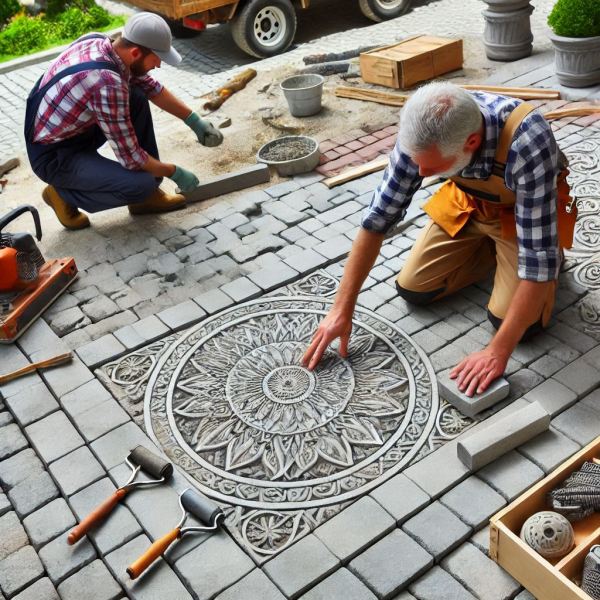
  5. How To Lay a Paver Patio: Build a Paver Patio Start to Finish

    Spread Paver Sand: ... Add 1-2 inches of sand on top of the gravel. ... Screed the Sand: ... to settle them into the sand. ... Add Polymeric Sand: ... Spread polymeric sand across the surface, filling
    how to lay a paver patio
  6. SIMPLE ESTIMATOR

    Sand: ${sand} cubic meters ... var sand = calculateSand(length, width, height);
  7. How many bags of cement are needed to lay 3,000 blocks?

    mixed with sand? ... how-many-blocks-can-i-get-out-of-one-bag-of-cement-50kg-mixed-with-sand ... blocks, we first need to know the standard cement-to-sand ratio for laying blocks and the number of blocks
    How many bags of cement are needed to lay 3,000 blocks?,How much cement bags are required to construct a 1 sqm, 20 cm block wall?, cement 50kg ,How to Mix Ready Mix Concrete,How to Mix Ready Mix Concrete?,What Is Mortar,What Is Mortar,How many wheel barrows of sand for molding blocks per bag of cement?,BLOCK PAVING,Block Paving,Block Paving,Block Paving,Block Paving,Block Paving,Block Paving,Block Paving,Block Paving,Block Paving,Buying Blocks or Moulding,Buying Blocks or Moulding,Buying or Moulding,Bricks vs. Blocks,Bricks vs. Blocks, cement 50kg ,How many blocks does 1 bag of cement consume when building a wall?,Right Cement Mixer,Right Cement Mixer,Right Cement Mixer,What to consider when selecting a power supply?,Right Cement Mixer,Right Cement Mixer,Cement Mixer Maintenance,Cement Mixer Maintenance,Cement Mixer Maintenance,Cement Mixer Maintenance,Are There Any Effective Alternatives to Cement and Asphalt Roads?,Are There Any Effective Alternatives to Cement and Asphalt Roads?,cement and asphalt roads,Construction success,Construction success,Construction success,construction management,Construction Management,Concrete pouring,Construction Management,Communication breakdowns IN CONSTRUCTION MANAGEMENT,Floor Space Index,floor area ratio (far) and floor space index (fsi),How is FSI Calculated, and Why Does it Matter,Floor Space Index,Floor Space Index ,Curtain wall glazing,Curtain wall glazing and traditional windows,Curtain wall glazing and traditional windows,Fix Foundation Problems Yourself,Fix Foundation Problems Yourself,Value for Money,value for money,KSC-20170629-PH_LCH01_0033,1:2:4 Water Cement Ratio in Concrete Mixes,How many wheel barrows of sand for molding blocks per bag of cement?,BLOCK PAVING,Block Paving,Block Paving,Block Paving,Block Paving,Block Paving,Block Paving,Block Paving,Block Paving,Block Paving,Buying Blocks or Moulding,Buying Blocks or Moulding,Buying or Moulding,Bricks vs. Blocks,Bricks vs. Blocks, cement 50kg , cement 50kg
  8. Build Your Own Paver Patio: Everything You Need to Know About DIY Paver Patio Cost and Installation

    is Polymeric Sand, and Why is it Important? ... Polymeric sand is a special type of sand used to fill ... solid gravel base and paver sand, is essential for a long-lasting patio. ... Use polymeric sand to fill joints and
    Build Your Own Paver Patio,paver patio,Build Your Own Paver Patio
  9. How Many Bags of Cement Are Used in a 1:3:6 Ratio Concrete?

    Calculating Sand and Aggregate for 1 Cubic Meter ... To determine how much sand and aggregate are ... moisture content in sand and aggregates can alter the required cement quantity. If the sand and aggregates
    How Many Bags of Cement Are Used in a 1:3:6 Ratio Concrete?,How Many Bags of Cement Are Used in a 1:3:6 Ratio Concrete?,How many bags of cement are used in a 1:3:6 ratio concrete?,How many bags of cement are used in a 1:3:6 ratio concrete?,How many bags of cement are used in a 1:3:6 ratio concrete?,How many bags of cement are used in a 1:3:6 ratio concrete?,How many bags of cement are used in a 1:3:6 ratio concrete?
  10. How much cement bags are required to construct a 1 sqm, 20 cm block wall?

    ratio of 1 part cement to 6 parts sand by volume: ... Cement-to-Sand Ratio: 1:6 ... mixed with sand? ... how-many-blocks-can-i-get-out-of-one-bag-of-cement-50kg-mixed-with-sand
    How much cement bags are required to construct a 1 sqm, 20 cm block wall?, cement 50kg ,How to Mix Ready Mix Concrete,How to Mix Ready Mix Concrete?,What Is Mortar,What Is Mortar

Share:
/* */